
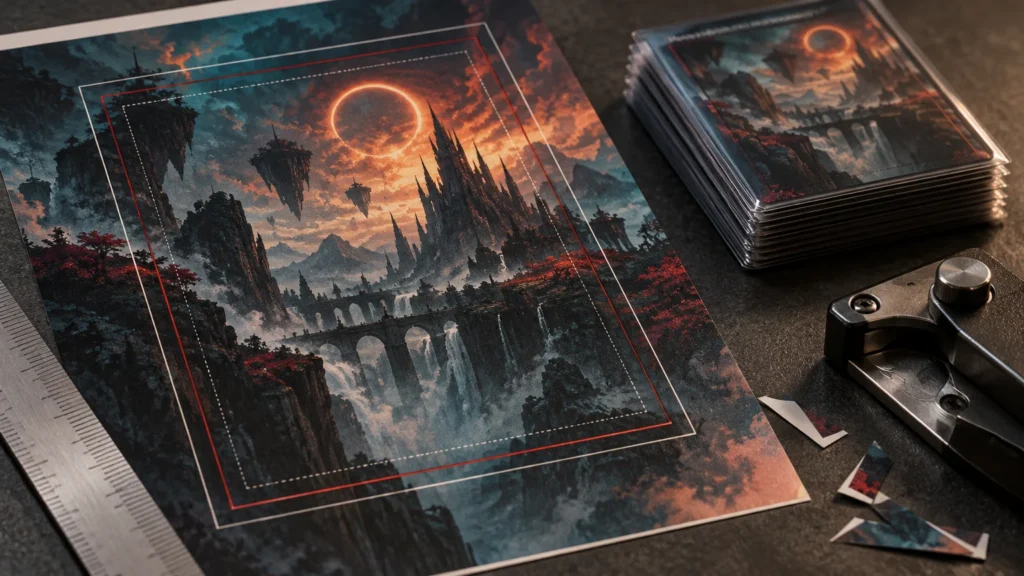
How Much Bleed Should an MTG Proxy File Actually Have?
For most commercial MTG proxy files, start with 0.125 inch of bleed on every edge—but always let the printer’s template control the final dimensions.
For most commercial MTG proxy files, start with 0.125 inch of bleed on every edge—but always let the printer’s template control the final dimensions.
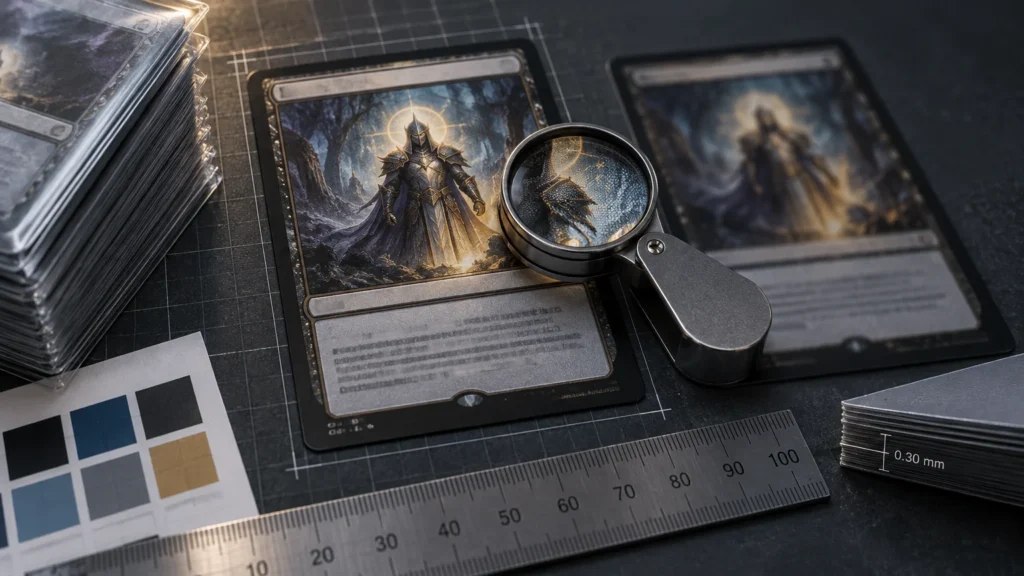
A practical workflow for checking an MTG proxy image’s pixel dimensions, effective PPI, final print size, bleed canvas, and small-detail sharpness.
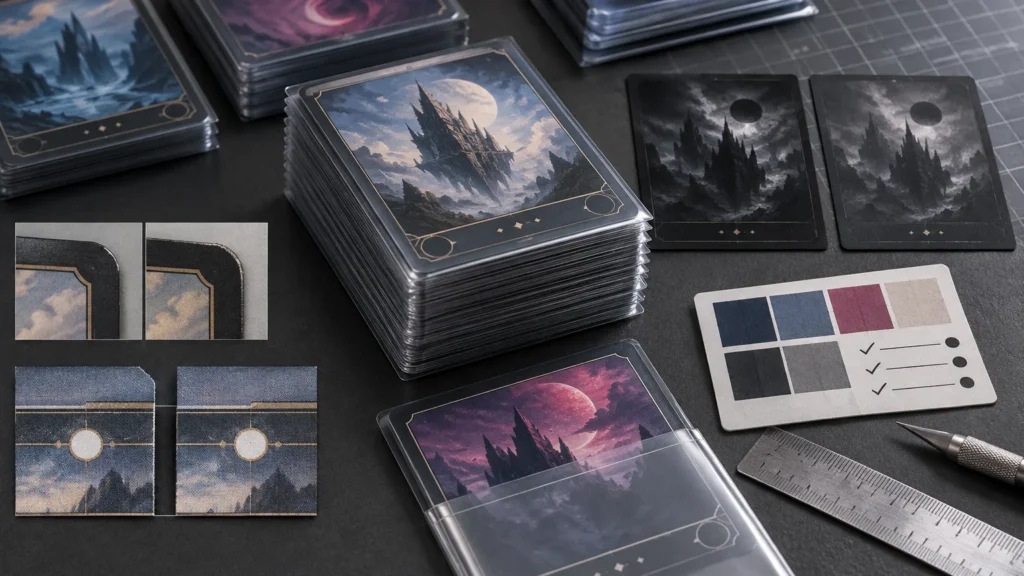
A practical PrintReviewer-style framework for comparing delivered MTG proxy cards instead of relying on cardstock names, resolution claims, or product photos.
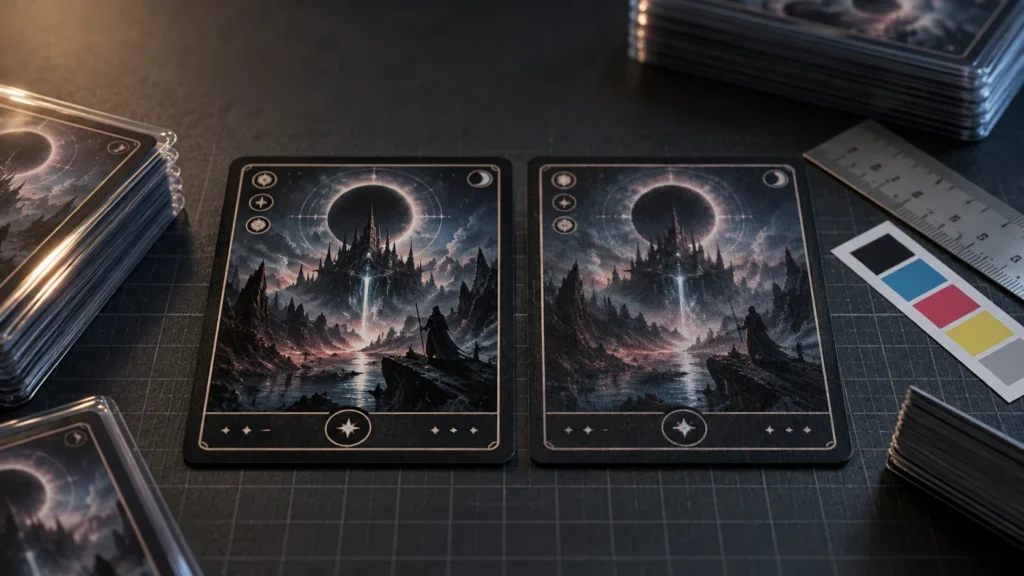
PNG is usually the safer final format for complete MTG proxy card faces, but a carefully exported JPG can work when file size matters. Here is how to choose without sacrificing text, symbols, or print quality.

Build cleaner custom MTG card files by keeping text, symbols, and frame geometry vector while sizing raster artwork for the final printed card.
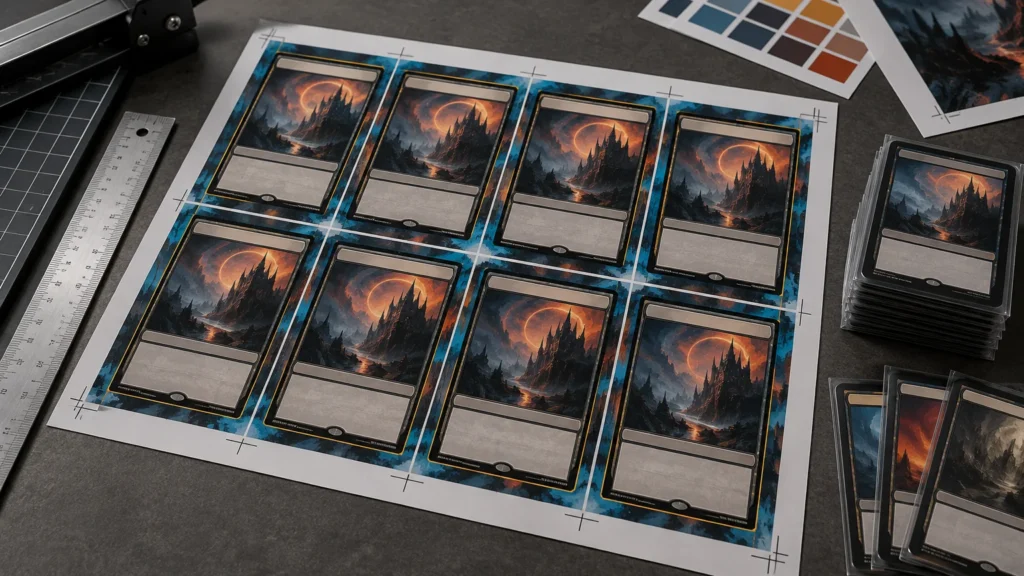
Build print-ready MTG proxy files by understanding bleed, trim lines, safe areas, crop marks, resolution, color conversion, and cutting tolerance.
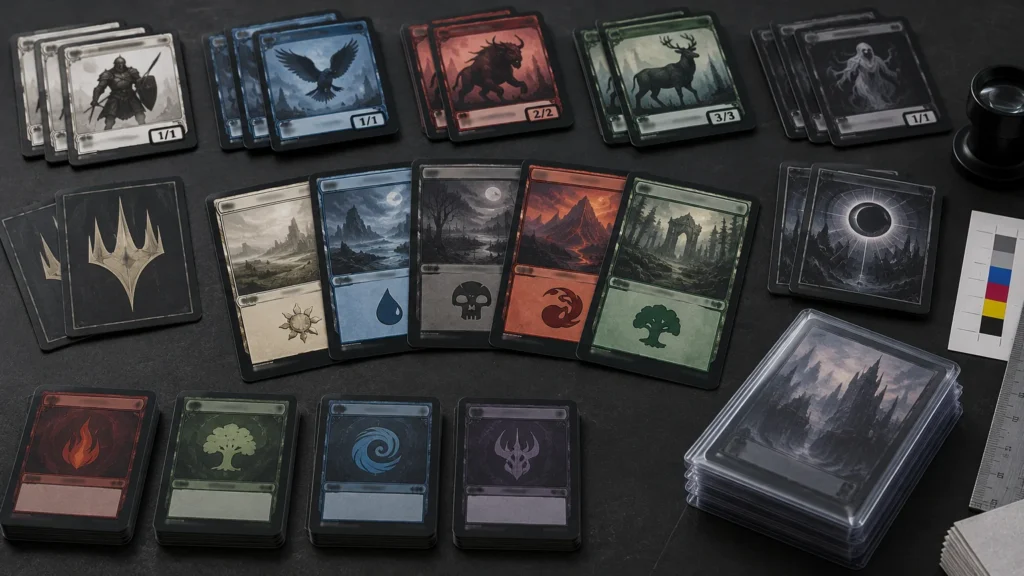
Build one coordinated production system for a proxy deck’s basic lands, tokens, emblems, reminders, and other special game pieces.
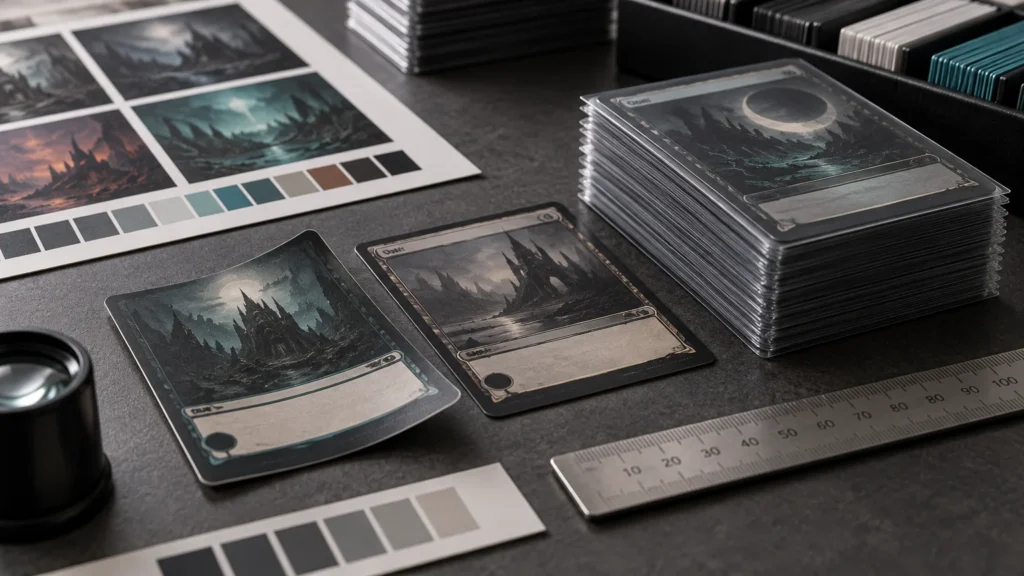
Grain direction can influence how cardstock bends, folds and reacts to moisture, but it is rarely the first specification to prioritize for flat custom cards.
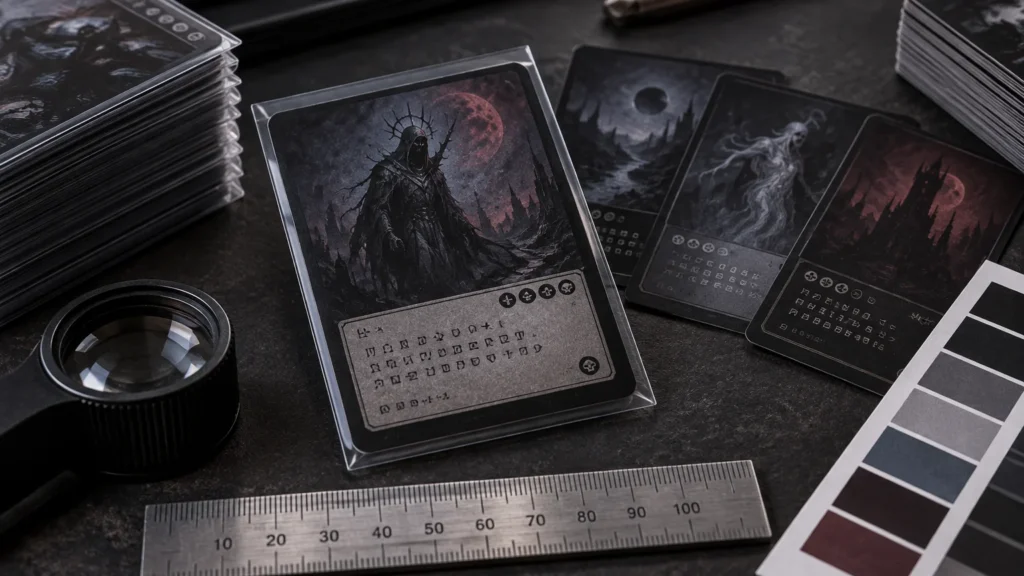
Learn how to preserve dark custom-card artwork without sacrificing rules-text clarity. This guide covers local contrast, text panels, opacity, type weight, keylines, black handling, and print proofing.
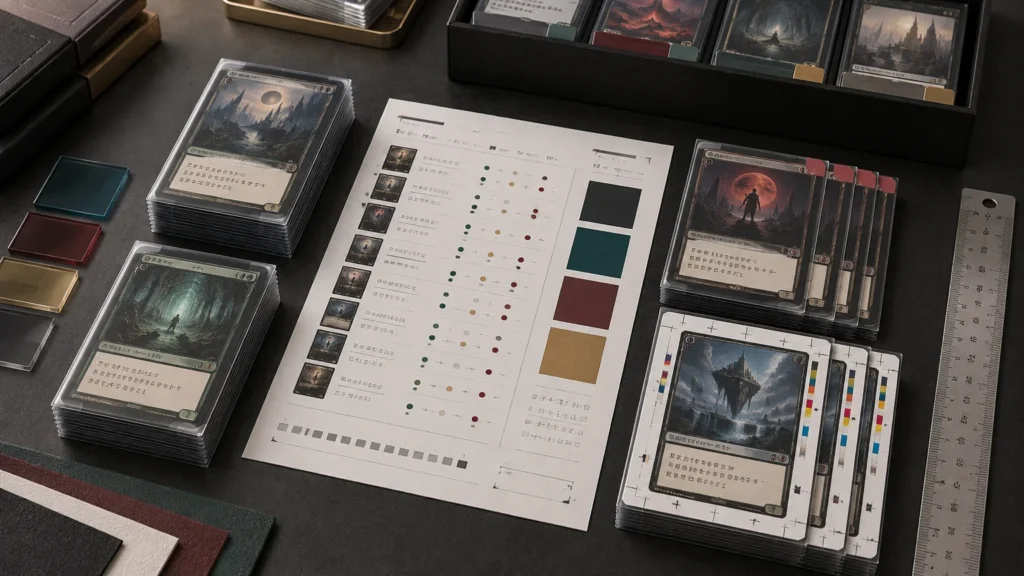
Build a cube proxy manifest that separates card identity, printing, artwork, and production files so reprints and intentional duplicates stay accurate.